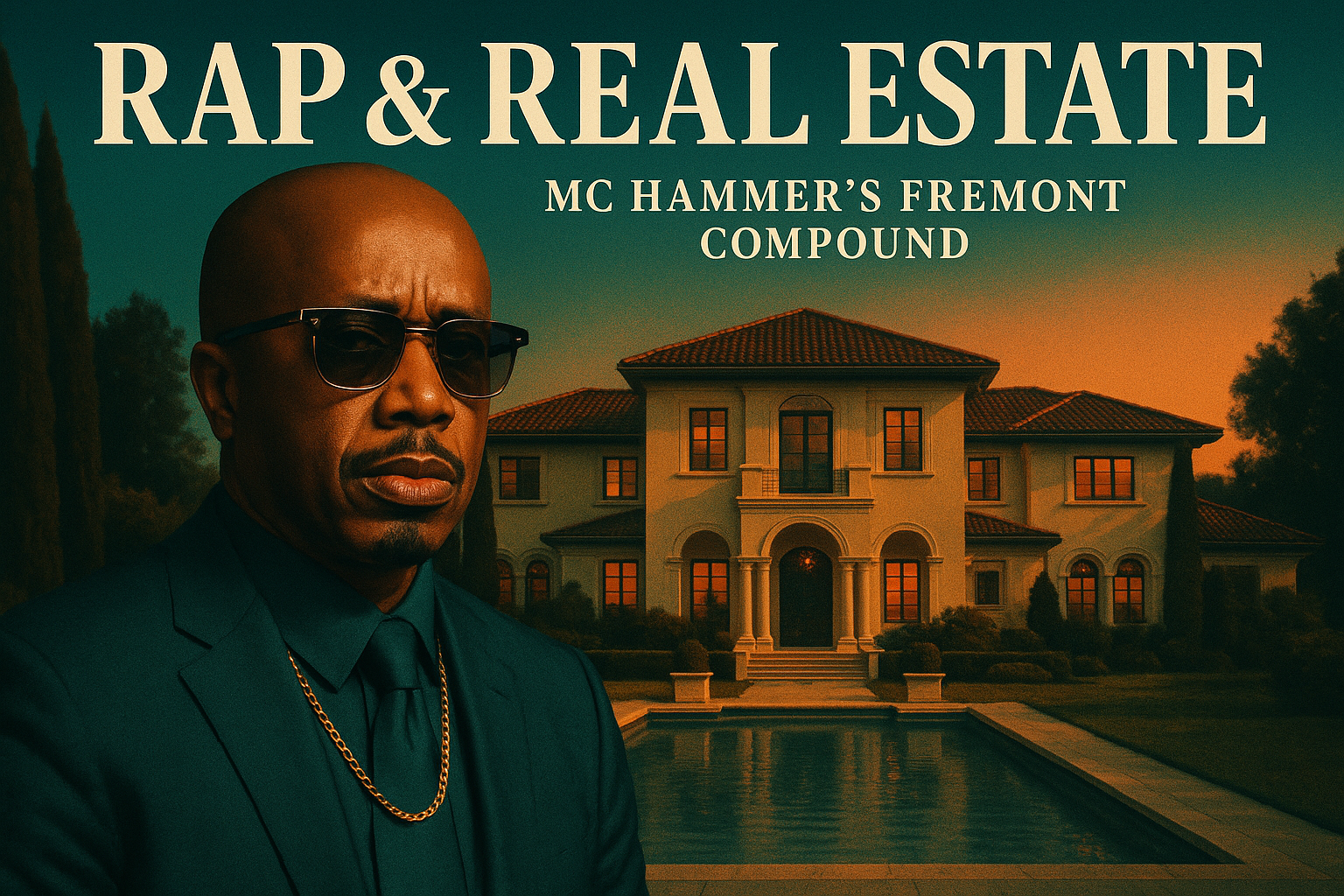
MC Hammer’s Fremont compound has lived for decades as one of hip-hop’s most famous cautionary tales. The image still lands instantly: East Bay superstardom at full blast, a sprawling property built out with spectacle, a payroll that felt closer to an entourage economy than a household, and a monthly burn rate so heavy it turned the place into legend.
That version of the story is memorable. It is also too shallow.
The lazy reading is that Hammer failed because he made a terrible real estate bet. That is not really what happened. The sharper reading, especially from a Bay Area housing perspective, is that he was not wrong about Fremont. He was wrong about what he built on top of the asset, what he expected the asset to carry, and how much cost he attached to the whole machine.
That difference matters, because people still make the same mistake now, just at a smaller scale and with fewer helicopters.
Everybody remembers the compound. They forget the math.
Hammer’s property became famous for the spectacle. A baseball field. Helipads. Studio space. A large staff. The kind of details people repeat because they sound too big to be real.
But the most important detail was not the spectacle. It was the carrying cost.
Real estate does not just ask whether you can buy it. It asks whether you can carry it.
Those are different questions.
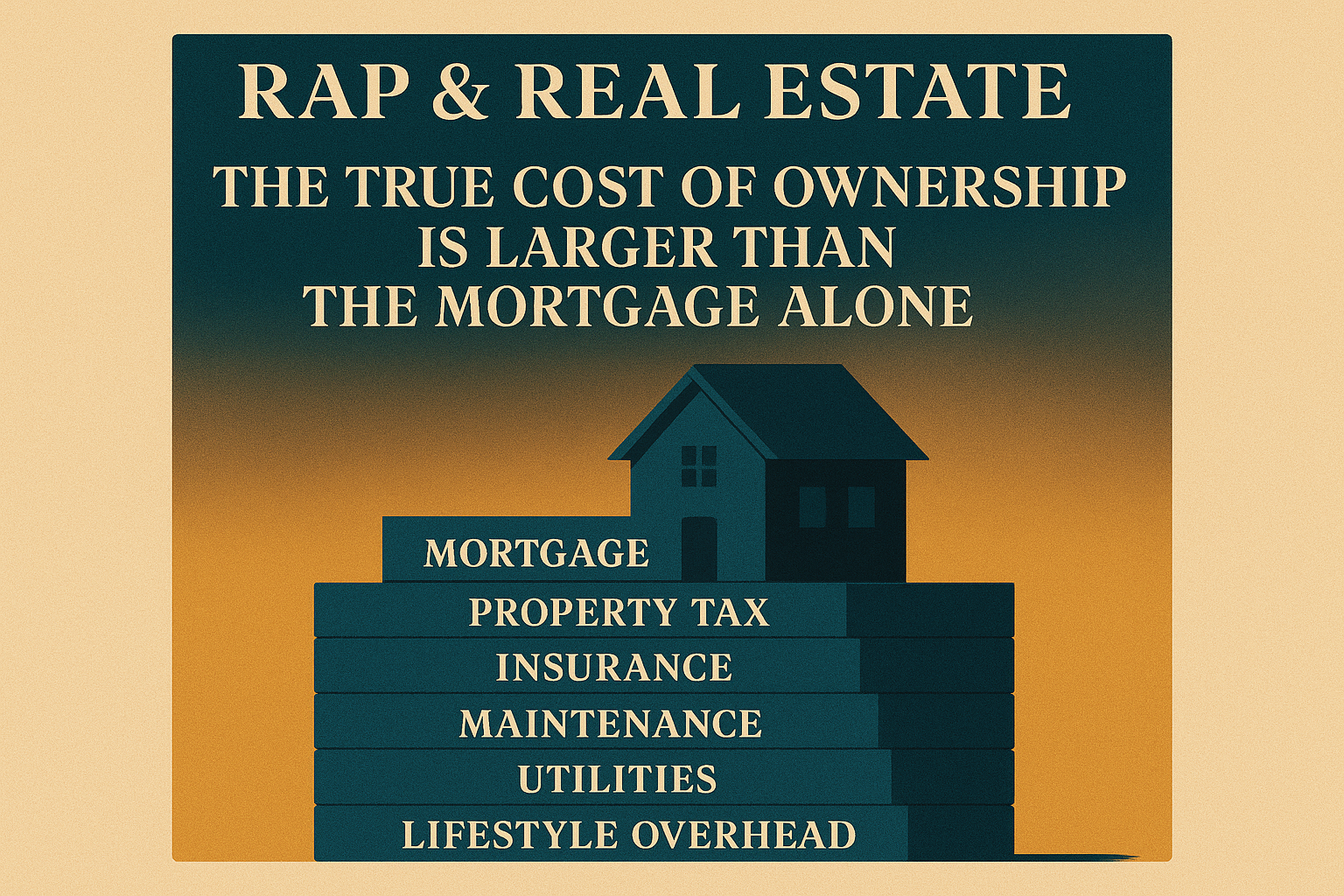
A lot of buyers, not just celebrities, make decisions based on whether they can survive the closing table. They think about down payment, loan approval, and the emotional high of getting the deal done. What fades into the background is the ongoing math: property taxes, insurance, maintenance, utilities, repairs, staffing where relevant, landscaping, security, deferred upkeep, and all the lifestyle overhead that starts piling up once a property becomes part home and part identity project.
That is where strong assets start getting buried under weak operating structures.
Owning the asset and carrying the life wrapped around that asset are two different math problems.
Fremont was not the embarrassing part.
This is the point that gets lost when the story is reduced to celebrity excess.
Fremont was not some absurd vanity location. It was, and still is, a serious Bay Area market with real fundamentals: strong regional access, durable housing demand, school-driven household appeal, and long-term appreciation logic that has held up over time.
If you strip away the mythology and just look at the location, the underlying market call was not foolish.
Hammer was not wrong to believe East Bay real estate had long-term value. The Bay has validated that logic again and again.
What was wrong was assuming a good market could rescue a bad ownership structure. A strong location can help an asset appreciate. It cannot save you from operating costs that chew through your cash flow faster than the property can ever compensate.
That distinction matters because Bay Area buyers still make versions of this mistake all the time. They stretch for a property in a market they believe will keep rising forever. Sometimes they are right about the market and wrong about the strain.
A house is one cost. A lifestyle stacked on top of it is another.
This is the educational heart of the story.
You can buy into a good market and still lose if the system around the property is too expensive to sustain. The issue is not always the mortgage itself. Sometimes it is everything orbiting the mortgage: taxes, insurance, maintenance, scale, vanity improvements, specialized features, and the pressure to keep feeding the image the property was built to project.
At the celebrity level, that turns into payroll, security, groundskeeping, specialty facilities, and the expectation that the estate functions like a permanent production set.
At the ordinary buyer level, it looks more familiar but can be just as destructive. Buying at the top of your approval range. Underestimating Alameda County taxes. Pretending maintenance is optional. Assuming insurance will stay manageable. Furnishing a house beyond your actual budget. Taking on a property whose ongoing demands leave no breathing room for the rest of your life.
The scale is different. The mistake is the same.
People do not usually get taken out by the fantasy they can describe. They get taken out by the recurring cost they did not respect.
This is still a Bay Area lesson.
That is why the Hammer story matters beyond rap history.
A buyer can technically qualify for a home and still have no business carrying it. That happens every day. Qualification is not comfort. Closing is not sustainability. A lender saying yes does not mean the structure is healthy.
In the Bay Area, this gets even more dangerous because the market trains people to normalize strain. Prices are high. Property taxes matter. Insurance volatility is real. Maintenance is expensive. Contractors are expensive. Almost everything tied to homeownership costs more than people want to admit when they first fall in love with the purchase.
So the useful question is not just, Can I buy this?
It is, Can I still carry this cleanly when the first surprise hits?
Can I carry it if insurance jumps? Can I carry it if repairs show up in year one? Can I carry it without my entire life becoming a hostage to the property?
Sometimes the market call is not the failure. Sometimes the failure is everything the owner demanded the property carry.
The deeper lesson is not “do not be flashy.”
That is too easy, and honestly too cheap.
The deeper lesson is that a good asset can be crushed by a bad cost structure.
People love moral stories about excess because they are simple. It is easier to laugh at spectacle than to talk seriously about sustainability. But sustainability is the part that transfers to real life.
Hammer’s story matters because it draws a clean line between choosing a market and building a structure you can actually keep alive inside that market.
He may have been right about the place. He was wrong about the burden.
The Plug’s Lesson
Buy what you can afford to keep, not just what you can qualify for. A strong market can reward patience, but it cannot rescue an ownership structure that is unsustainable from day one.

That is what turned a strong Bay Area location into a cautionary tale. And that is exactly why the story still teaches.
Want the real ownership math before you buy?
If you want Bay Area advice grounded in carrying costs, taxes, insurance, and the full cost of ownership, not just the mortgage payment, let’s talk.
Talk to Matthew →